Emotional Support
FEELINGS emotions are marvelous realities which enrich, excite and give meaning to life. Unfortunately you were conditioned from an early age to inhibit, depress, repress and deny your hurt feelings. Your fear and your anger were not very welcomed either. How about your love? Your joy? Your desire?
All of the feelings emotions in your past which were not fully expressed become inhibited emotions which are permanently stored in your physical body. These stuck feelings emotions are the reason your body is too tense or too fat.

Get Your Emotional Intelligence Working
Feelings Emotions are Not Thoughts
Emotions are different from thoughts. You cannot reach feeling information by thinking. You must be feeling in order to access emotional intelligence data. You need to get out of your “HEAD” in order to feel your emotions. Almost everyone “thinks,” they are feeling their emotions when they are not.
Your feelings emotions live in your body. You cannot reach a real emotion by thinking.
Thoughts are on the AM radio frequency and Feelings are on the FM stereo radio frequency. You will never find any real emotion or feeling by thinking.
You must experience your real feelings emotions on the FM channel, which is located in your body in order to move your human energy into a healthy vibration.
You need to learn to recognize the difference between thoughts and feelings. It is the difference between abuse and emotional intelligence.
Definition of Emotional Health and Emotional Intelligence
No wonder we are confused about our emotions and feelings, emotions are new, colorful experiences that have not been clearly defined or properly researched by anyone. Pandora set our emotions free from her famous box, igniting our emotional healing process.
We are in the early stages of evolving into Emotional Health. Therefore, the information you find on the web is usually incorrect about emotions and feelings. Even psychological researchers don’t know the difference between a conditioned response that is a learned reaction and their own innate emotions that are deep in their unconscious.
You have to explore your unconscious in order to discover that:
- Emotions are different from thoughts.
- Feelings are different from thoughts.
- Emotions are different from feelings.
What is Emotional Health? People who are emotionally healthy are emotionally secure. Emotionally secure people allow and receive that is going on around them and inside of them.
Emotional Health exists when you are relaxed and do not react to situations or other people with a knee jerk, conditioned response. You feel your emotions, you do not act on them. Emotionally healthy people use their feelings to gather information about reality to help them make good decisions so they can be assertive and effective.


Everyone needs to learn how to heal emotionally so we can improve our emotional health and become more loving. Everyone needs emotional physical healing and Emotional Healing Therapy.
What is Emotional Intelligence? Most researchers agree that humans who are open and receptive have a high degree of Emotional Intelligence. We also know you can improve and increase your Emotional Intelligence.
This means that effective Emotional Healing Therapy could dramatically improve your Emotional Health and Emotional Intelligence.
I was born with Emotional Intelligence and didn’t know it or appreciate it until I become a psychologist. During my internship with the state of New Jersey, my group therapy members asked me, “What are you feeling, Doris?” Puzzled and confused, I sat in silence. I thought I had answered that question. Group members explained to me, “You are expressing your thoughts, not feelings.” I felt foolish, embarrassed to be unaware and defensive.
It took me years of working with clients and feeling my emotions, to discover the difference between feelings and emotions. This is because most of us are conditioned from an early age to inhibit, depress, repress and deny our feelings and emotions.
You may be just like me, confused and puzzled about what you are feeling in the moment and afraid to feel your emotions. I learned to hide my hurt and not cry when I felt like crying. I acted like I had not been hurt and didn’t care, creating a serious chip on my shoulder.
Was your fear and anger welcomed by mother, dad or teachers? Probably not. Many psychologists, teachers and researchers still call hurt, fear and anger negative emotions. Some even label them- toxic emotions.
Negative and toxic emotions do not exist.
All emotions are essential for emotional health and wellness. In order to use your Emotional Intelligence you need to use Emotional Healing Therapy to achieve Emotional Health and Wellness.
Negative and toxic knee jerk reactions DO exist.
When you react to situations, you are defensive and closed. Defensive responses can be mean and nasty. When you are closed, you are not feeling your genuine emotions, you are avoiding them. Being stuck in an automatic knee jerk reaction occurs because you feel threaten, anxious and insecure.
You cannot reach an emotion or feeling by thinking.
You must be in a feeling state in order to access emotions.

Your feelings and emotions live in your body.
Thoughts have an AM radio frequency. Switch the dial to FM stereo to tune into your feelings and emotions located in your body.
If you want to know how to heal emotional trauma, explore the new frontier, your body. Even if you were born with a great deal of Emotional Intelligence, you need to achieve emotional physical healing in order to improve Emotional Health.
The way to engage in Emotional Healing Therapy is to stop thinking and start feeling. Emotions and feelings add depth, richness, vitality and meaning to each moment of your life. Emotional security is worth more than gold.
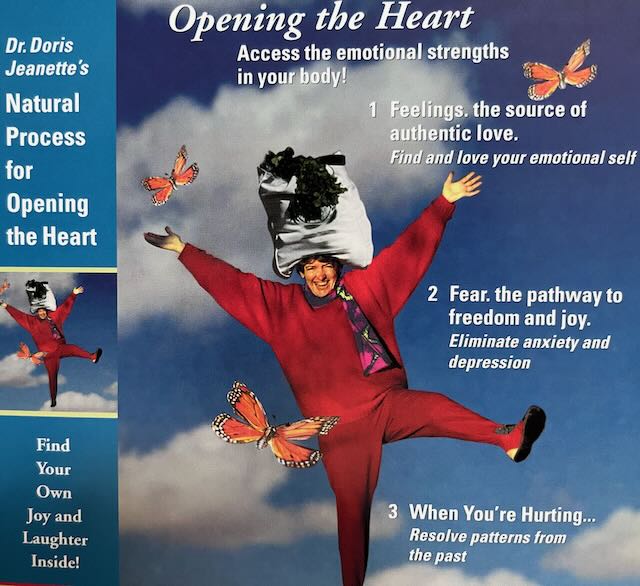
Learn now to heal emotional trauma with the Emotional Healing Therapy audio guide:
The Opening the Heart audio series is specifically designed to guide you through the maze of confusing energies into your authentic emotional self who is the authority on what you feel at any given moment.