
Anxiety Treatment
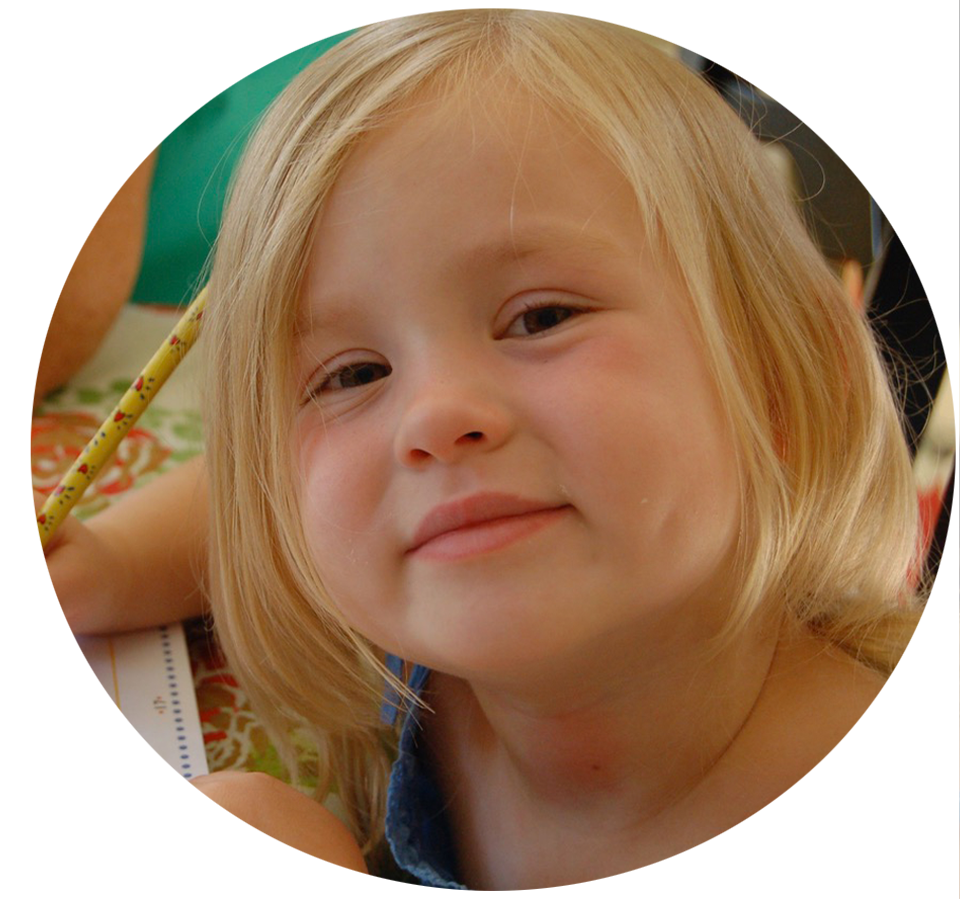
Emotional Health
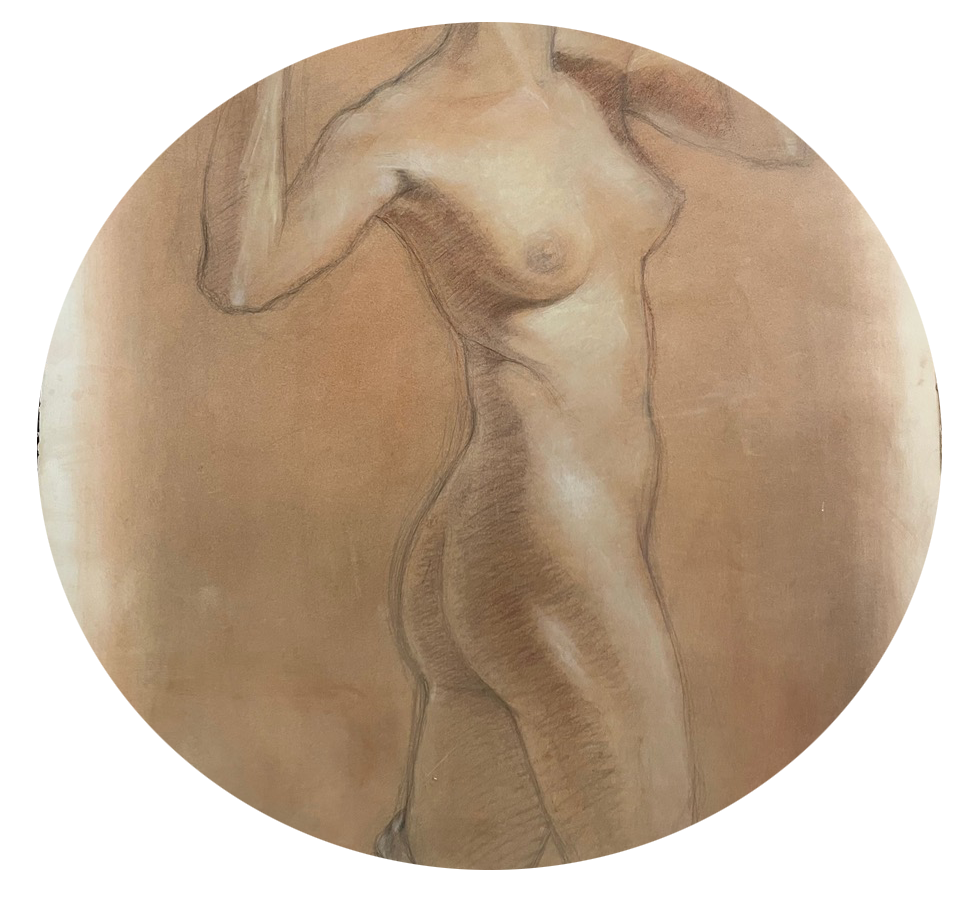
Body Awareness
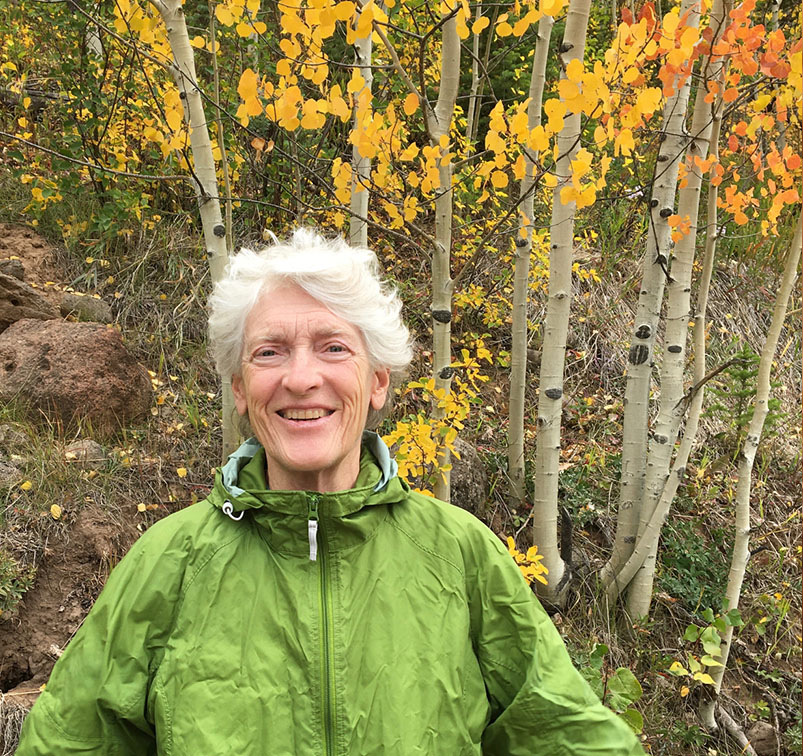
The Holistic New Psychology is An Effective, Bodyful, Alternative Therapy
Creating Smarter, Stronger, Happier people who take care of mother earth
If you’re looking for natural, alternative ways to feel more secure and self-confident, you’ve found holistic therapy answers that work. Since 1976 Dr. Doris Jeanette has successfully used alternative and holistic psychology, learning research, assertiveness training, relaxation therapy, body psychotherapy, spiritual therapy and energy healing instead of medications, Cognitive Behavior Therapy or Talk Therapy to empower people.
Dr. Jeanette’s website offers you a wealth of free alternative and holistic psychology articles and resources that teach you how to become stronger, healthier and happier. Drjeanette.com is also a portal to self-help, self-care products and holistic psychology training programs that teach you how to transform your anxiety and Inner Critic into natural, flowing, healthy energy.
Featured on






How Is The Holistic New Psychology Different?
The New Holistic Psychology lifts you up and empowers you. It teaches you how to find, heal and be your natural born joyful energy in a safe and sane manner. This mind-body harmony leads to exciting, spiritual adventures as well as pleasurable feelings of being alive in your body because you are following your heart.
The current psychotherapy, regulated by managed care, teaches you to control your thoughts, manage your anger and inhibit your “wiggle” (sexual) and spiritual energy. This lack of mind-body harmony leads to an ordinary and mundane life because you are doing what you have been conditioned to do instead of expressing the vital energy in your heart and soul.
The greater your mind-body harmony, the better your mental health- emotional health – holistic health.
Learn more about the definition of the New Holistic Psychology and how it is different from traditional psychotherapy.
We’re here to help
Because so many people cannot afford therapy that works, Dr. Doris Jeanette is offering free Holistic Psychology information that is fact based, reliable and effective. Learn about healthy relationships, download free Alternative Therapy reports on anxiety and depression, explore sex and spirituality articles and health and wellness special reports.
Often women, artists, multicultural, LGBTQIA and BIPOC people are afraid to seek psychotherapy because they may be forced to change who they are to fit into a sexist, vanilla world. Dr. Jeanette knows it is a crime against humanity to drug or medicate children who could become our next Einstein, Madam Currie or Dr. King.
Dr. Jeanette is here to empower all of Mother Earth’s children. All of us are equal and all of us are lovable. To believe anything else is a highly irrational thought that is not in harmony with our planet or the cosmos. Enjoy getting to know your True Nature and interact with us to create a more loving world.
Sign up for The Vibrant Moment, an Alternative Therapy newsletter that reminds you who you really are.
ASK Dr. Jeanette your personal question.
“Sensational”
Dr. Jeanette,
Your web site has been helping me so much. I read the free articles and the Sex and Love columns over and over again.
I started crying just writing those two sentences. You are the only place I have ever read this truth–you can’t access feelings through “thinking” about them. Who else says this? Talking and thinking about feelings doesn’t work.
BK in Canada

Dr. Jeanette’s Services
Begin Your Journey to Body Freedom and Emotional Joy
Dr. Jeanette, pysd
The Vibrant Moment Blog

The Vibrant Moment
Free Newsletter
“Thank you for all your timely wisdom. I’ve been reading The Vibrant Moment, for almost 20 years. What I find so amazing is how every one of your newsletters coincides with exactly what I am dealing with at the time!
Reminds me of I Ching!”
Amor Smith






Order the Best Selling Audio, “Opening the Heart,” audio and e-book
What others say about Dr. Jeanette’s audio
“Thank you, thank you, for the audio, Opening the Heart, I love it. I’m going to recommend it in my next newsletter.” Dr. Elisabeth Kubler-Ross, M.D. Mother of Death and Dying
“These are magnificent aural aids to psychospiritual evolvement…Relaxing…with a wise and hypnotic voice. Recommended highly!” Rochelle Holt, The Pilot
“I bought your audio last year. I’ve listened to the Fear. The pathway to freedom and joy hour about 90 times and each tine I get something new out of it.” R.W. International Women’s Writing Guild
“Wow. Your audio blows me away. No one else is saying what you’re saying. It makes perfect sense. They are helping me so much.” Michael Chandler
“Doris Jeanette’s audio offers hope for the future, keys to opening our hearts, and the first step toward creating a whole new way of living.” Jenna Catherine, Conversing with the Future
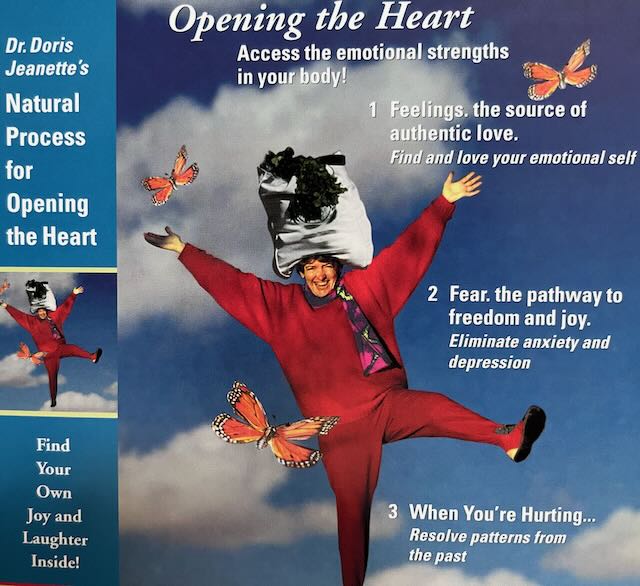
Dr. Doris Jeanette is a pioneer in the exploration of human feelings and emotions. She has unraveled the natural process that shifts frozen, emotional energy into vital flowing energy. Her emotional health guide is designed to help you free the vital energy that is stored in your sensitive, emotional self and physical body.